





Five Tips for Better Walks with Your Small Dog.
Tired of your dog walks becoming a drag?
Tired of your dog walks becoming a drag? Maybe they pull you to their favorite sniffing spot and refuse to budge, or yank on the leash trying to say hello to every passing squirrel. You're not the only one who sometimes dreads an afternoon dog walk. Take a deep breath and read on. We have some solid tips to help you and your pup strut your stuff.
1. A good dog walk begins with a calm dog.
Do you get your little dog excited for a walk by jingling the leash or excitedly saying something like "Who wants to go for a walk!” As cute as it is to see your pup excited for a walk, it’s setting the wrong tone for the walk. This is especially true if your little dog pulls on the leash.
You want to keep your pre-walk energy low to help keep your little dog calm. When you kneel to put your pup’s harness or collar on, let the dog come to you. Once you have the leash connected, give your pup some quiet praise and gentle petting. The goal is to have a nice, calm dog before you walk out the door.
By the way, be sure you’re nice and calm as well. If you’re trying to rush in a quick dog walk before your own dinner or going out somewhere, your dog will pick up on that energy.
2. Keep your dog from dragging you out the door.
With your little furry friend calm, relaxed, and leashed, the next step in the dog stroll is walking out the door. If your pup is barking, spinning, or scratching the door trying to get out, just stand still until the dog stops and sits. The goal is to get your little dog calm and settled so you can walk out the door without your dog or dogs pulling you. This is especially important if you have to go down steps when you walk out the door.
If your dog bolts out the door as soon as you start to open it, call him or her back inside and try again. Getting your pup to walk slowly out the door may take a few tries, but people-pleasing pups will quickly figure out what they need to do to get the walk started.
3. How to Stop Leash Pulling and Protect Your Small Dog's Trachea.
If your dog pulls on the leash, your instinct might be to pull back. But when you pull on your pup’s leash, what happens? The dog pulls back. It’s not to be defiant; it’s because the dog’s opposition reflex takes over. If your little dog is wearing a collar instead of a harness, all that pulling pressure is hard on their throat and can lead to further issues with a collapsed trachea. What is a collapsed trachea?
Dr. Brian Evans, CEO of Dutch, explains, “A collapsed trachea is a common disorder in small breeds that is either present at birth, or acquired later in life. Traditional collars can irritate and cause coughing in dogs with a collapsed trachea. It’s best to avoid unnecessary repetitive pressure in the neck area by using a harness."

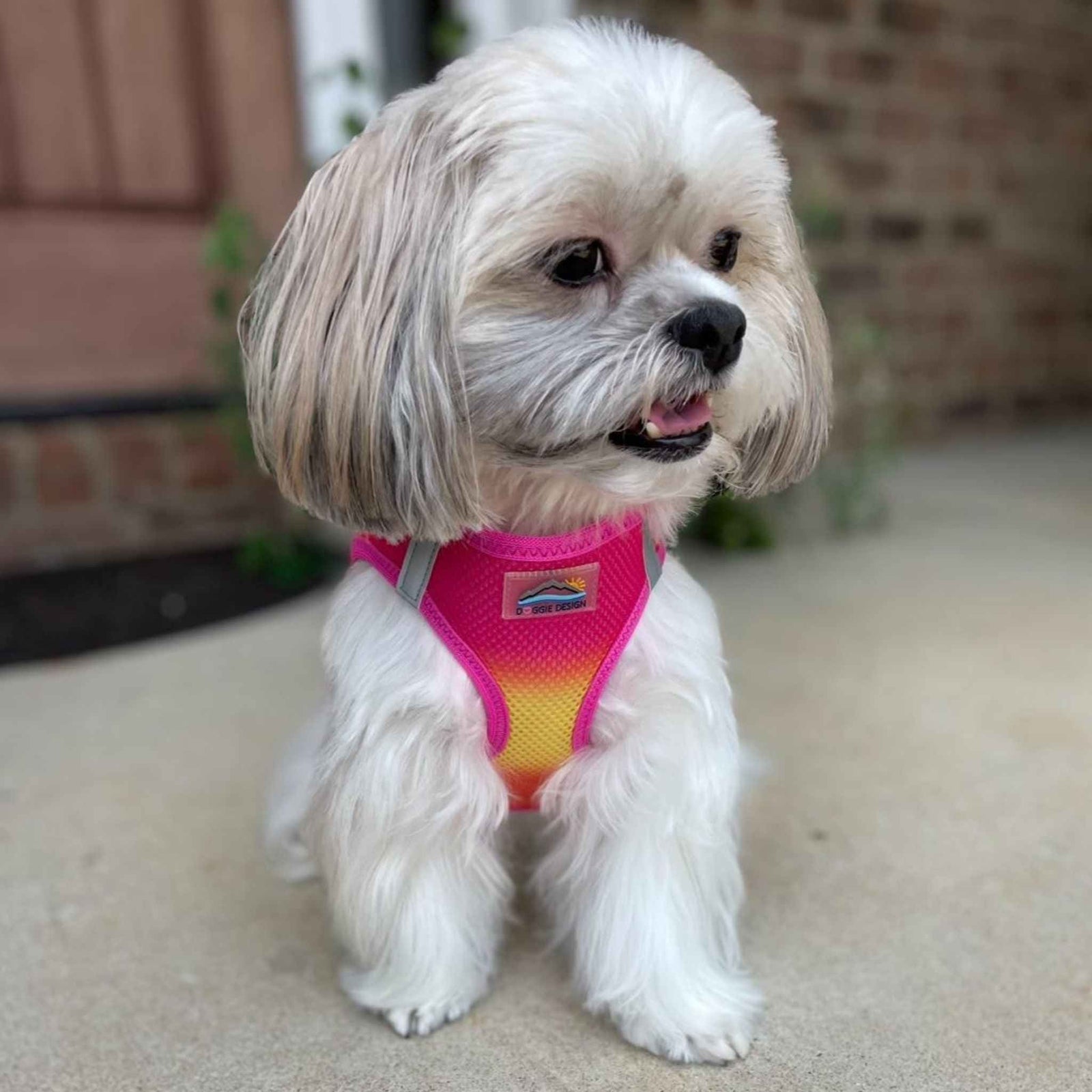
The American River Ultra Choke Free harness or Plush Step-In Harness are two great small dog harness options.
So how do you stop your dog from pulling on the leash? Here’s one training technique you can try. With your dog on a leash, take 10 steps in one direction and then call your dog’s name, turn, and walk in the opposite direction. When the dog changes direction and the leash is loose, give your pup praise and a treat for a good job. The reward is for the loose leash, not turning. So, time your praise and treat accordingly.
Practice this a few times a week for about five minutes. Be sure to vary directions and make your moves unpredictable so your dog stays focused on following you. You’re the pack leader, and this exercise will help you walk your dog without leash pulling. Be patient. Be consistent. It may take a few days. It may take a few weeks. Every dog is different. The key is consistency.
4. Why A "Sniffari" Provides Essential Mental Stimulation.
Why do dogs sniff so much? Think of a dog sniffing a mailbox post like you scrolling through Facebook. By sniffing, your dog is getting updates on what’s happening in the neighborhood. Your dog is using his powerful nose to determine things like which dogs were in that same spot, how long it’s been since another dog has been around, or whether other animals are nearby. Processing all of those scents provides needed mental stimulation for dogs.
So how do you keep your furry friend from sniffing everything in sight? One simple way is to choose a few dedicated sniffing spots along your regular walking route where you can let your pup take in all the smells.
When your pup stops to sniff in a non-sniffing zone, use your version of “leave it” to direct your dog away from sniffing and back to walking. You can also use your body to guide your dog away from places he wants to sniff. Let’s say you’re approaching a neighbor’s mailbox and your dog starts pulling toward the mailbox. Have your pup stop and sit. Then get yourself in position so you’re between your dog and the mailbox, blocking the dog’s path and redirecting him away from the mailbox.
When your dog walks away from the no-sniff spot, give him lots of praise for a job well done.
5. Mix up where you walk your dog.

Dogs thrive on routines. Just like humans, they can get bored with the same old, same old. Mixing up where you walk is good for both you and your small dog. Even if you’re walking in a different part of the neighborhood, you’ll see new sights and maybe different neighbors. Your pup will have exciting new scents to sort through.
Pick a few days a month to take your dog someplace new to walk, such as a park, downtown, or a nearby walking trail. Both you and your pup will enjoy the change in scenery, and you’ll find walking in a new location with fresh scents will give your pup important physical and mental stimulation.
Wishing you many happy dog walks together.
PS - Still looking for that perfect small dog harness? Click here to see our customer favorites.